LAS Releases SCADS 2026 Technical Report
The report explains the latest research to help U.S. intelligence analysts implement agentic AI into their workflows.
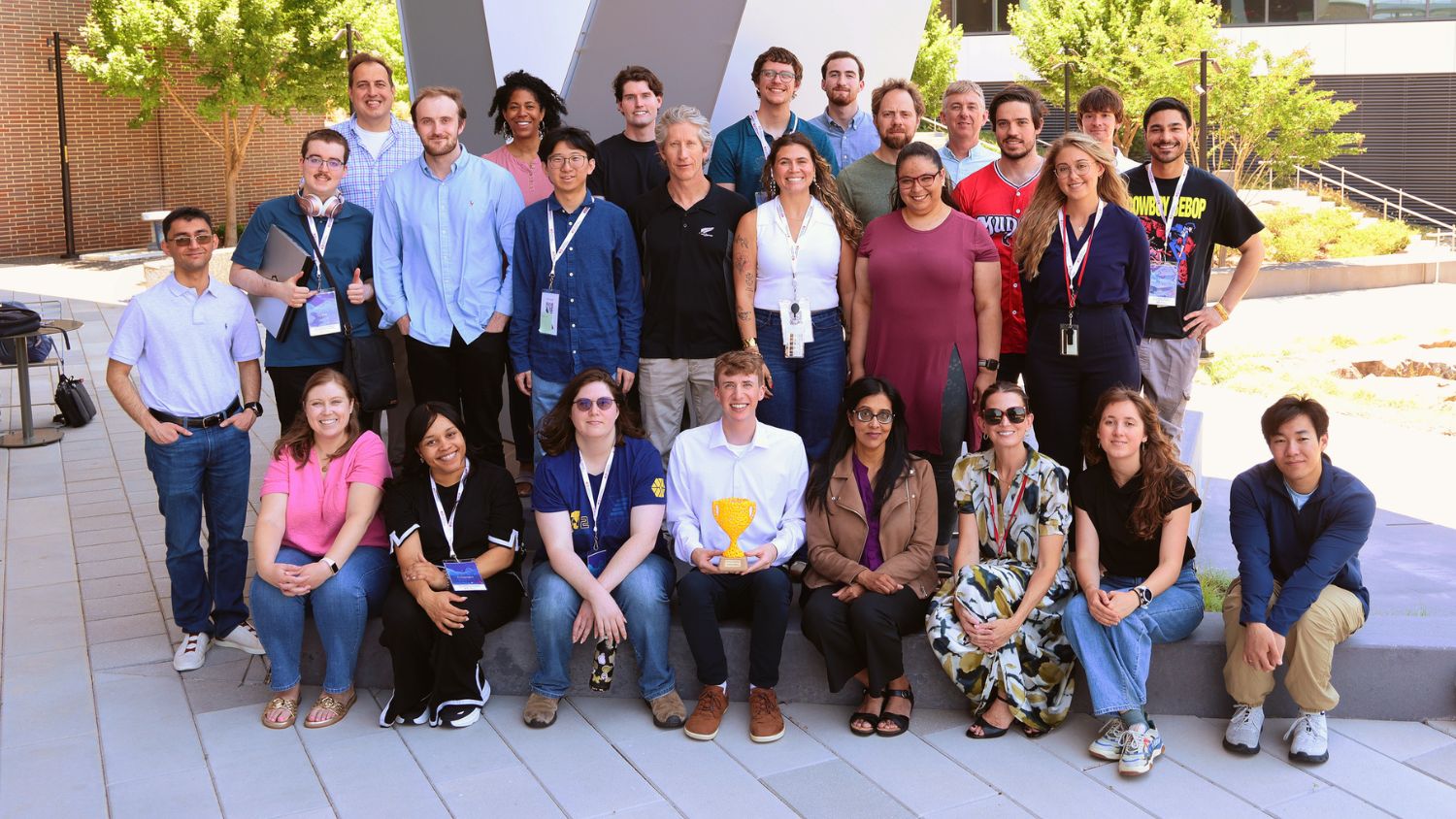
LAS has published its technical findings from the 2026 Summer Conference on Applied Data Science. The report captures the results of 13 projects completed this past summer by 28 participants. SCADS is an eight-week program hosted by the Laboratory for Analytic Sciences (LAS) at North Carolina State University in Raleigh, NC. Government, industry, and academic collaborators gathered daily on Centennial Campus to tackle the SCADS problem set and build AI tools for defense and national security decision-makers. This aligns with the intelligence community’s belief that more informed decisions can be made when armed with the insights of those in academia and industry working on similar challenges.
Download the SCADS 2026 report (PDF)
Researchers at SCADS 2026 addressed a broad question: how can AI become an active, trustworthy participant in intelligence-analyst workflows involving vast, complex data? This year’s teams examined systems that can search and reason over large information spaces, use analytic tools, maintain and update knowledge over time, and help analysts determine where their attention is most needed.
While the technical report provides detailed methods and outcomes for each of the 13 projects, it begins with a high-level overview explaining six technical takeaways from SCADS 2026:
- Governed, tool-first architectures make agentic AI more trustworthy and useful.
- Use the smallest model that reliably solves each part of the problem.
- Purpose-built evaluation is necessary to know whether AI works for the intended mission.
- Context is a resource to manage, not a capacity to maximize.
- The best AI workflows conserve analyst attention rather than maximize AI output.
- Deployment constraints are part of the AI problem, not an engineering step that comes afterward.
SCADS research also raises new questions about how to evaluate, govern, and deploy such systems when their actions become part of the analytic workflow, say the report authors.
The rest of the report is organized around three focus areas, Agentic AI Workflows, AI Evaluation, and AI/ML Implementation, each introduced in its own section along with the individual technical reports produced under it.
“The SCADS 2026 workshop focused on developing agentic workflows for the intelligence analyst operating on vast amounts of data,” says Stephen S., an LAS researcher and one of the report authors. “These systems were built by teams who considered evaluation and implementation as fundamental to that goal at all stages of development.”
SCADS 2027 is scheduled for June 7-July 30. The application opens October 26, 2026. Graduate students, faculty researchers, and industry professionals may apply.
Download the SCADS 2026 report (PDF)
About LAS
LAS is a partnership between the intelligence community and NC State that develops innovative technology and tradecraft to help solve mission-relevant problems. Founded in 2013 by the National Security Agency and NC State, LAS brings together collaborators from three sectors – industry, academia, and government – each year to conduct research that has a direct impact on national security.
- Categories: