Summer Conference on Applied Data Science
AI Evaluation and Implementation for the Intelligence Community
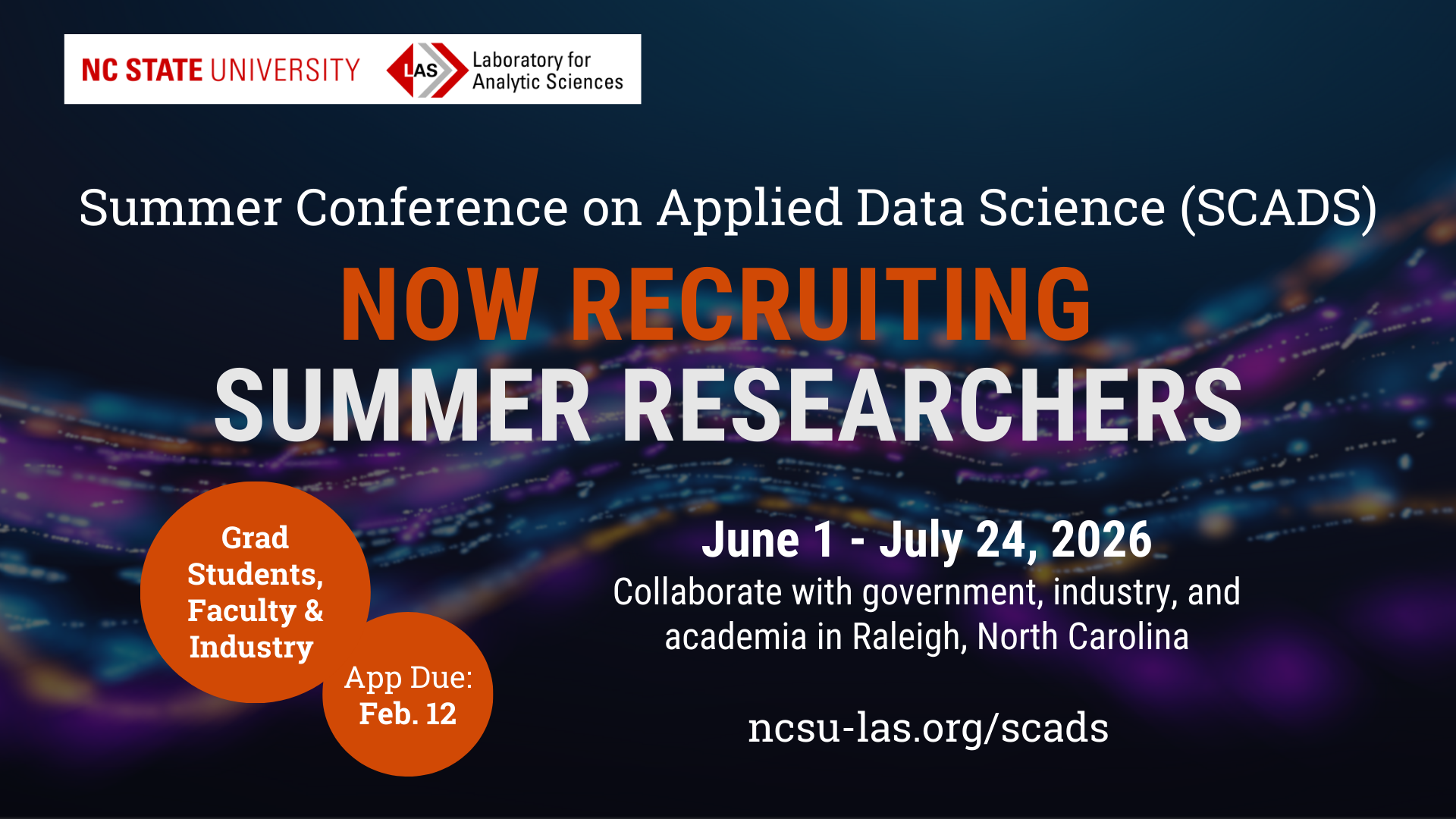
June 1 to July 24, 2026
Raleigh, NC
Program
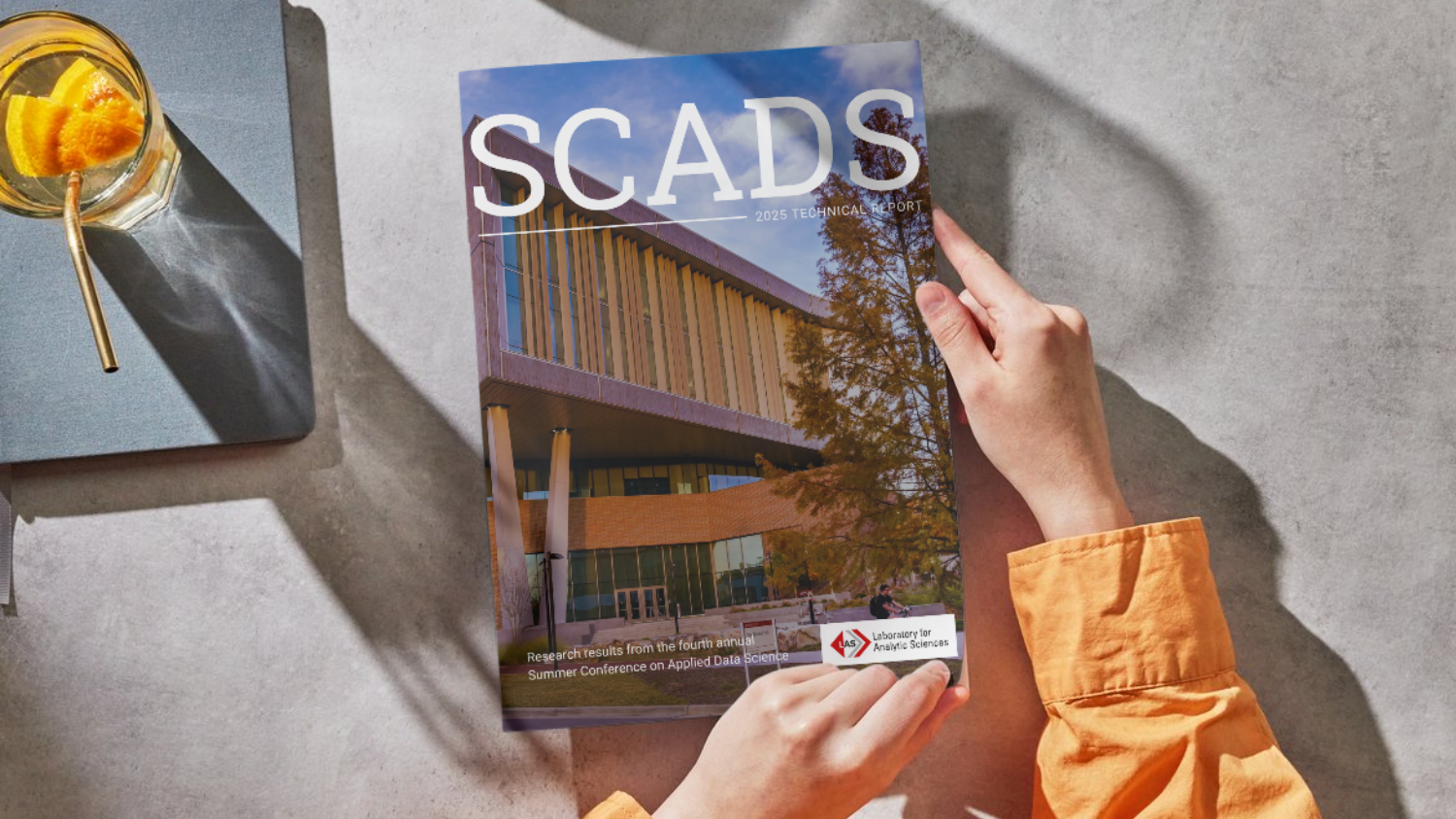
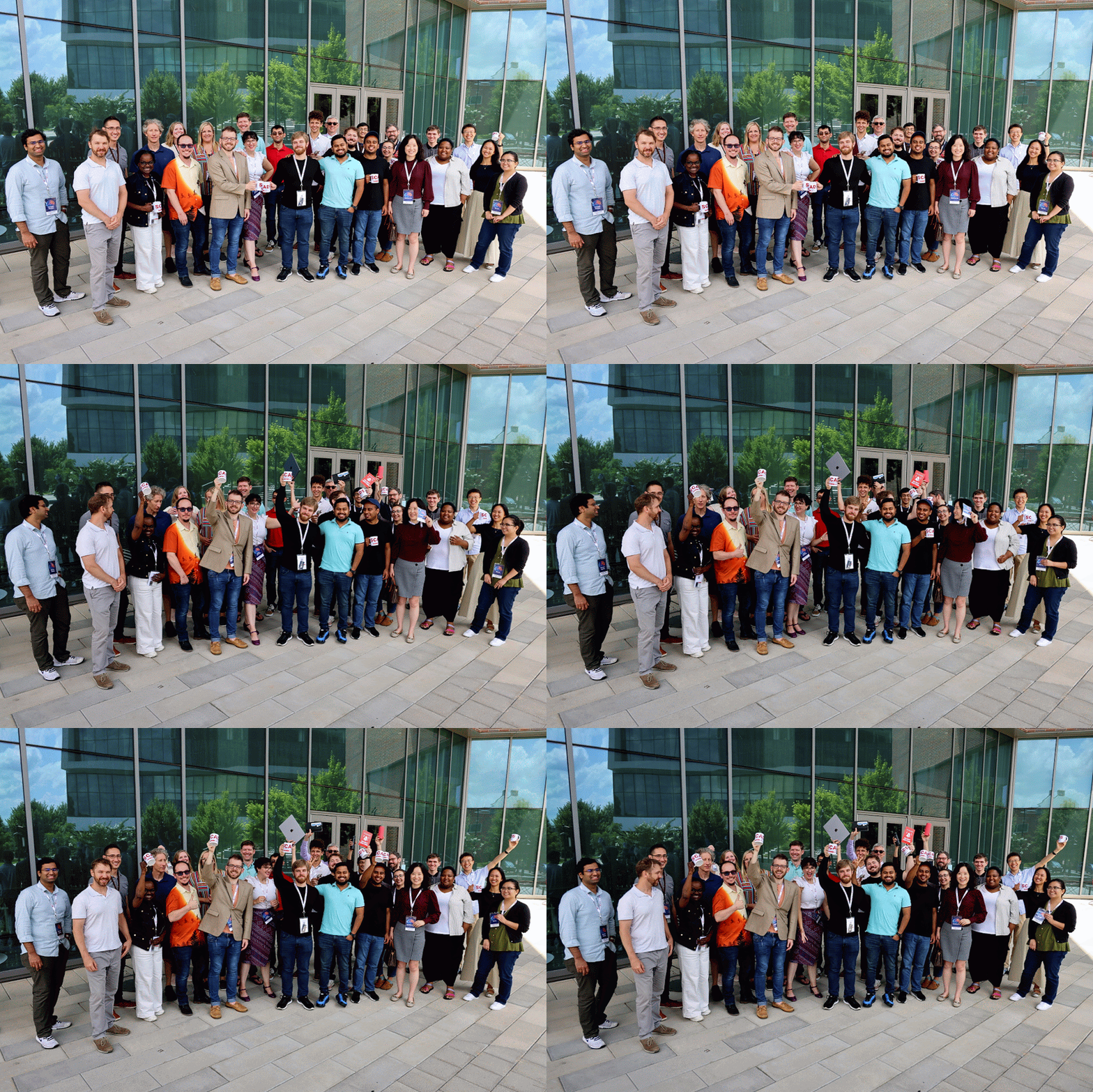
The LAS Summer Conference on Applied Data Science (SCADS) is an annual immersive collaboration experience that combines data scientists, intelligence analysts, researchers and software engineers. Offering in-person workshops and sessions over an 8-week period, SCADS is designed to bring together interdisciplinary experts from academia, industry and government to address a data science research challenge. As participants work together to build on existing research, this program provides practical data science training, networking opportunities, and access to different perspectives.
Participants spend time learning about the problem domain and datasets, then collaborate in groups to focus on the problems most interesting to them. Groups present their research results at the end of the conference.
As artificial intelligence (AI) continues to permeate many aspects of the intelligence community, particularly intelligence analysis workflows, more scrutiny is needed to ensure that AI is performing as intended. Also, due to the complexity of intelligence analysis tasks and the vastness of the data, the specifics of AI implementation are of primary concern.
At SCADS 2026, participants will focus on these areas:
- AI Evaluation: measuring and benchmarking the capabilities, reliability, and limitations of modern model-based systems.
- AI Implementation: efficient deployment of models with a focus on distillation and quantization methods for edge and resource-constrained environments.
- IC-Focused AI Agent Development: the creation and development of AI agents and assistants designed to support IC analytic tasks by structuring and augmenting the full analytic workflow.
- Sensemaking for large or non-atomic entities: methods for representing, analyzing, and interacting with complex entities—such as systems, organizations, events, or knowledge domains—using visual and graph-based displays that surface structure, relationships, and uncertainty.
- Dataset Creation: to support the goals of the other research areas.
Together, these research areas will advance the development of trustworthy, efficient, and human-centered AI systems by strengthening how we build, evaluate, deploy, and understand them.
SCADS 2026 Information Session
Participants
Researchers whose interests intersect with problems posed by such challenges are invited to apply to attend SCADS. While not an exhaustive list, this could include research in:
- AI Evaluation
- AI Implementation
- AI Agent Development
- Sensemaking for large or non-atomic entities
- Dataset Creation
Student Applicants
Graduate students are invited to join us as paid Summer Research Scholars. Positions are full-time (40 hours/week). If needed, we provide support for local accommodations and travel. The application closed February 17, 2026.
Are these positions open to international students?
No, students must be U.S. citizens to be eligible for the program.
Will this be considered a cross-enrollment at NC State University?
You will not be enrolled at NC State. Student Summer Scholars are considered temporary employees of NC State.
What support is provided?
Student Summer Scholars are expected to work 40 hours/week and will receive a competitive stipend of $11,500. Students who do not already live in the local area (within 35 miles of campus) are eligible for a stipend to support local accommodations and travel.
How many positions are available?
We anticipate hiring 6-12 students in total.
Is a security clearance required for this position?
A security clearance is not required. The conference will be unclassified. Applicants with active clearances should note that status in their application.
Am I eligible to apply?
Applicants must be U.S. citizens and currently enrolled in a master’s or Ph.D. program. There are no requirements around coursework or specific degree programs. We welcome student applicants from all disciplines interested in participating in SCADS.
What is required to apply?
Answers to three short-answer questions, a resume or CV, and contact information for one (1) reference. Your reference will be asked to complete a short questionnaire. Applications missing any of these elements will be considered incomplete.
What is the timeline once I have submitted my application?
The application deadline is February 17, 2026. Applications will be reviewed and the top applicants will be invited to a virtual interview in late February. Offers will be extended in early March.
How will mentorship be provided to students?
SCADS is a fast-paced, immersive, and collaborative environment. Students will work side-by-side with faculty, industry experts, and government staff.
Faculty and Industry Applicants
Faculty researchers and industry professionals interested in participating in SCADS are invited to apply. The application closed February 17, 2026.
Previous Work at SCADS
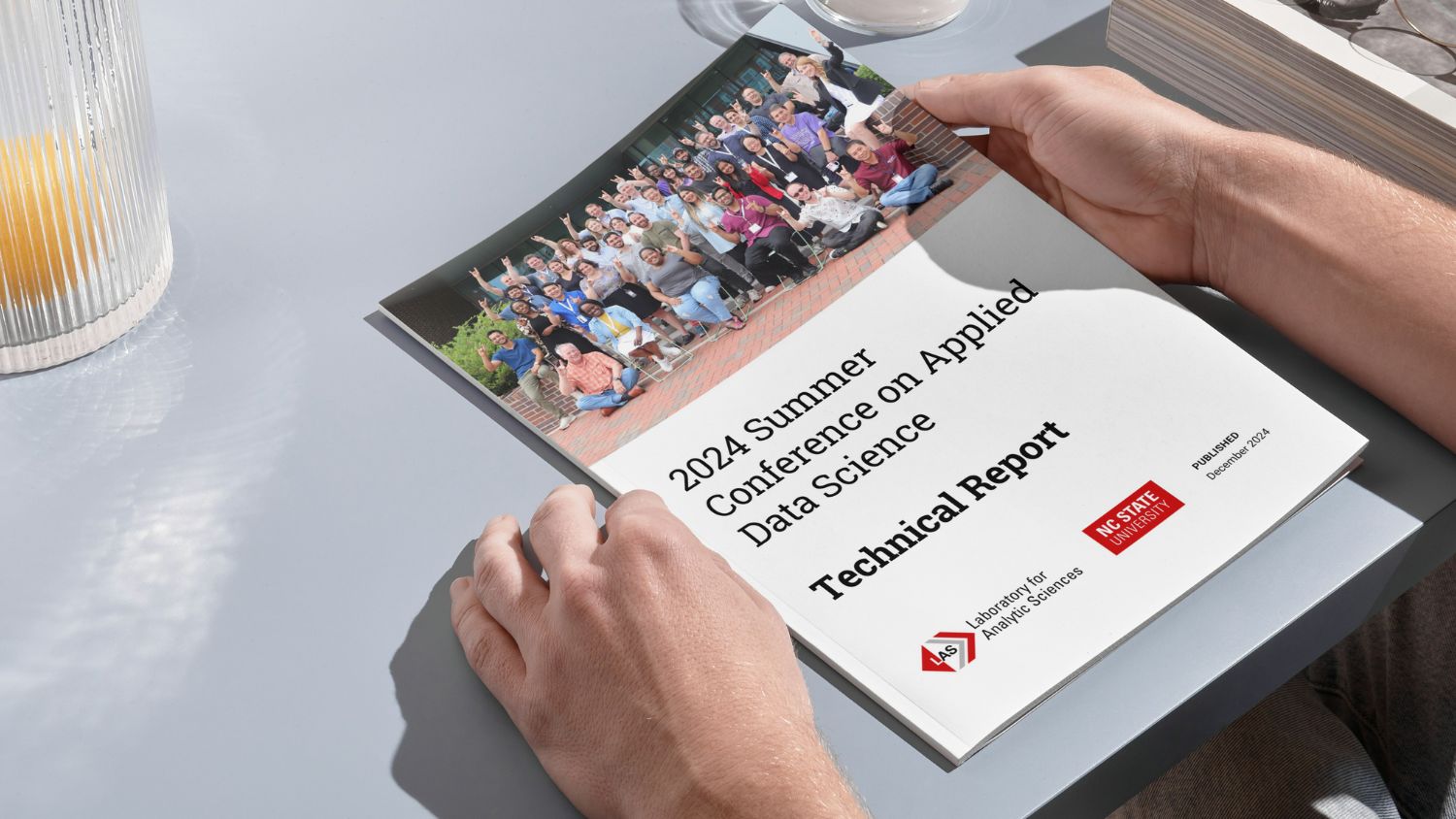
The grand challenge of SCADS 2022-2025 was to generate tailored daily reports for knowledge workers that capture information relevant to their individual interests. The U.S. intelligence community currently produces the President’s Daily Brief every morning summarizing national security information that the president needs to know. SCADS research aims to automate this process to scale from a single report for one person to continually updated reports tailored to the interests of tens of thousands of individuals. The content of tailored daily reports, also known as TLDRs, may be drawn from any number or variety of sources. TLDRs will be auto-generated using artificial intelligence and machine learning, user modeling, and information retrieval technologies and methods. From 2022 to 2025, SCADS conference participants focused on these issues related to the grand challenge:
- Conceptualizing the content, format, user interactions, and automated analysis of a TLDR
- Investigating ways to produce tailored summaries of information from a large-scale, continually-evolving multimodal dataset(s)
Contact
If you are interested in SCADS, please reach out or join our mailing list.